
Test mode — payments made here are not real charges.

A division of Hessler Paint & Ace Hardware

Main site
Fabric memos and drapery samples at Hessler Interiors

Fabric guide

Which fabric belongs on which job

Linen wrinkles. Stretch fabric won't hold a drapery length. Silk shatters in sun. Here's the honest version of how every material behaves — before you fall in love with a sample.

Application

Upholstery

Upholstery fabric fails in three ways: it abrades, it stains, or it stretches out of shape over the frame. Pick for the way the piece actually gets used — a formal living room chair and a family sectional are not the same job.

What works

  • Solution-dyed acrylic
  • Performance fabrics
  • Wool & wool blends
  • Polyester
  • Full-grain leather
  • Poly or performance velvet

Think twice

  • Silk

    Abrades and water-spots. Not an upholstery fiber outside a museum room.

  • Linen

    Fine on a low-use accent chair; it will pucker and soil on a daily-use sofa.

  • Rayon/viscose

    Too weak on its own; acceptable only as a minor blend component.

  • Loose chenille

    Snags on claws and can distort on arm fronts.

Read the double rubs (Wyzenbeek)

Under 9,000: decorative only. 9,000–15,000: light residential. 15,000–30,000: everyday residential. 30,000+: heavy-use and commercial. The number is abrasion resistance — it says nothing about staining or fading.

Match the pattern to the frame

Large repeats need more yardage and get centered on cushions and backs. A 27-inch repeat on a tight-back sofa can add several yards to the order. We calculate this before you approve the price.

Railroaded vs. up-the-roll

Railroaded goods run sideways off the bolt, letting us cover a long sofa back seam-free. If a fabric isn't railroaded, a wide piece needs seams — decide whether that bothers you before ordering.

Know the cleaning code

W = water-based cleaner. S = solvent only. WS = either. X = vacuum only, no liquid. An X-code fabric in a house with kids is a bad match no matter how good it looks.

Tight upholstery is unforgiving

Textured, stretchy, or loosely woven goods look best on loose-cushion, casual frames. Tailored tight-back pieces want a stable, tightly woven fabric.

Application

Draperies & curtain panels

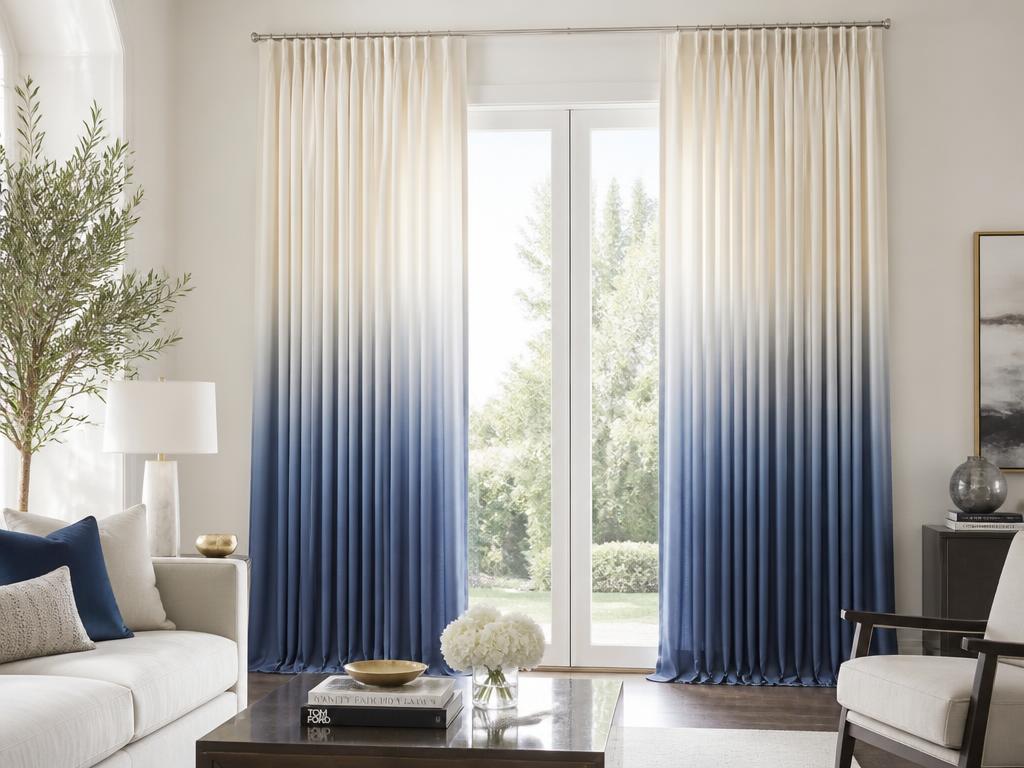
Drapery is judged on how it hangs — the break at the floor, the evenness of the pleats, and whether the panel still measures the same next year. Weight, stability, and lining decide all three.

What works

  • Polyester & faux silk
  • Linen blends
  • Wool & wool blends
  • Cotton (lined)
  • Velvet

Think twice

  • Stretch knits & elastane blends

    They will not hold the finished length. The panel grows unevenly under its own weight — drooping at the leading edge, dragging in places, floating in others, and splaying the pleats. Avoid for drapery.

  • Silk

    Sun-shatters. Only in a protected room, lined and interlined.

  • Rayon/viscose-heavy goods

    Grow and shrink with humidity; the hemline moves seasonally.

  • 100% linen

    Beautiful, but expect wrinkling, seasonal length movement, and sun degradation without lining.

Line everything facing the sun

Lining protects the face fabric, blocks light bleed, and makes panels hang straighter from the street. Interlining adds body, insulation, and a luxury fold — it's the difference between good and expensive-looking.

Fullness is not optional

Panels should be 2x to 2.5x the rod width in fabric. Anything under 2x looks flat and skimpy no matter how good the fabric is. Sheers often want 3x.

Decide the break before we hem

Float (½ inch off the floor, cleanest for daily use and pets), kiss (just touching, most tailored), or break/puddle (1–3 inches extra, relaxed and romantic — and a dust catcher). Once it's hemmed, it's hemmed.

Weight and hem construction

A 4-inch double-fold bottom hem with chain or corner weights is what keeps panels plumb. Skinny hems on light fabric flare and never hang right.

Let goods relax before final hemming

Natural fibers and heavy weaves settle after hanging. On a critical install we hang, let them relax, then hem — especially for floor-to-ceiling panels.

Pattern and repeat

Patterns must match across panels, which adds yardage equal to one repeat per panel. Big repeats on tall windows get expensive fast — worth knowing before you fall in love with the sample.

Application

Shades, Romans & soft treatments

Fabric shades are a structural problem, not just a decorative one. The fabric has to fold consistently, resist sagging across the width, and behave when light hits it from behind.

What works

  • Polyester
  • Linen blends
  • Cotton (medium weight)
  • Solution-dyed acrylic
  • Natural wovens

Think twice

  • Stretch knits

    Fold lines wander and the hem bar won't stay level.

  • Very heavy velvet

    Too much bulk in the stack on a Roman; the fold pile gets enormous.

  • Loose open weaves

    Sag across wide openings and telegraph the dowel pockets.

Backlighting exposes everything

With sun behind it, a shade shows seams, dowel pockets, thread color, and any slub in the weave. Hold the sample up to the window before you decide — not against the wall.

Line for the street view

White or off-white lining keeps the outside of the house uniform, protects the face fabric, and is often required by an HOA. Blackout lining goes in bedrooms and media rooms.

Width limits are real

Fabric shades sag past a certain width. Wide openings usually want two shades on one board rather than one oversized panel.

Prints and pattern placement

On a Roman, the pattern gets centered and the folds land where they land — a large motif can end up half-hidden in a fold. We map this before cutting.

Application

Bedding & bed treatments

Bedding is touched more than any other textile in the house, and it gets laundered. Hand and washability outrank almost everything else.

What works

  • Cotton
  • Linen blends
  • Linen
  • Wool (throws and blankets)
  • Velvet (accents)

Think twice

  • Coarse jute/sisal-type wovens

    Too rough against skin. Decorative only, and not on the sleeping surface.

  • Vinyl and faux leather

    Doesn't breathe. Accent only.

  • Silk

    Gorgeous, but plan on professional cleaning for the life of the piece.

Washed linen is the exception to the wrinkle rule

Pre-washed linen bedding is meant to look relaxed — the wrinkles read as intentional. That's the one place linen's biggest drawback becomes the point.

Coverlets vs. duvets

Coverlets are flat, tailored, and layer well in a warm climate. Duvets need a cover you're willing to wrestle. In Florida, most clients live on a coverlet nine months a year.

Coordinate, don't match

Pulling the bedding from the same house as the drapery fabric gives you a related palette without a matchy suite. We'll pull memos side by side.

Shrinkage on custom bedding

Anything cut to fit and later laundered must be pre-shrunk. Custom shams and bed skirts made from unwashed goods will not fit after the first wash.

Application

Pillows, throws & trim

Pillows are where you take the risk — the expensive fabric, the bold pattern, the fragile fiber. Small yardage, big impact, easy to change in three years.

What works

  • Velvet
  • Linen
  • Silk
  • Wool
  • Performance fabrics (for the ones people actually lean on)

Think twice

  • Very stiff upholstery goods

    Won't soften into a pillow shape; the corners stand up like cardboard.

  • Loose open weaves

    The insert shows through and the seams pull.

Down or poly

Down/feather inserts look luxurious and need daily karate-chopping. Poly holds its shape and never softens the same way. Down-alternative splits the difference for allergy households.

Oversize the insert

Use an insert 2 inches larger than the cover. A 20-inch insert in a 20-inch cover looks limp from day one.

Trim is where the money shows

Welt (self or contrast), flange, brush fringe, or knife edge — the finish reads before the fabric does. Contrast welt from the drapery fabric is our most-used trick for tying a room together.

Odd numbers, varied sizes

22-inch squares at the back, 20-inch in front, one lumbar. Same size across the sofa looks like a showroom, not a room.

Application

Outdoor, lanai & pool

In South Florida this is a category of its own. Sun, salt, humidity, and afternoon rain will find every weakness in a fabric within one season.

What works

  • Solution-dyed acrylic
  • Performance fabrics
  • Marine-grade vinyl

Think twice

  • Cotton

    Fades, mildews, and rots outdoors. Not even for a covered porch cushion.

  • Standard polyester prints

    Printed (not solution-dyed) goods fade in a season here.

  • Wool

    Humidity and mildew. Indoors only.

Solution-dyed is the whole game

Color spun into the fiber can't wash or bleach out. Surface-printed outdoor fabric is a different, shorter-lived product at a similar price.

Cushions need to drain and breathe

Reticulated open-cell or quick-dry foam with a mesh wrap, not standard indoor foam. Otherwise water sits inside and the cushion grows mildew from the middle out.

Mildew grows on dirt, not on the fiber

Acrylic itself doesn't feed mildew; the sunscreen, pollen, and salt on it does. Rinse cushions periodically and you double the life.

Salt air is abrasive

Within a few blocks of the water, expect faster wear on threads and zippers. Spec UV-stable thread — the seams fail before the fabric does otherwise.

By material

How each fiber actually behaves

Hand, best use, what to avoid, and the thing people usually find out too late.

Linen

Beautiful, breathable, and it will wrinkle. That's not a defect — it's the fiber.

Hand
Dry, crisp, slightly irregular slub. Relaxes and softens with age.
Good for
  • · Drapery panels where a relaxed, lived-in fold is the look
  • · Casual and coastal upholstery on low-traffic pieces
  • · Pillows and bed accents
  • · Roman shades where soft creasing reads as texture
Not for
  • · Anyone who wants a crisp, pressed panel forever
  • · High-traffic seating with kids or pets
  • · Tight-upholstered furniture where puckering shows
Watch out
Linen wrinkles, and it also moves with humidity — panels can hang an inch longer in August than in January. We hem for that. Linen is also weaker when wet and prone to sun rot; it must be lined and, in a bright room, interlined.
Care
Dry clean only in almost every case. Washing shrinks it and pulls the hems out of square.
In South Florida
Pure linen in a west-facing window will degrade. Use a linen blend or a linen-look polyester, and always line it.

Linen blends (linen/rayon, linen/poly, linen/cotton)

Most of the linen look with a meaningful drop in wrinkling and a big gain in durability.

Hand
Close to linen, slightly smoother and more uniform.
Good for
  • · Drapery that should look like linen but hang cleanly
  • · Everyday upholstery in a casual room
  • · Bedding and shams that get handled daily
Not for
  • · Purists who want the true slub and irregularity of 100% linen
Watch out
Rayon content is the wrinkle-fighter but it's also the weak link — high-rayon blends can stretch and are less colorfast. Ask us which side of the blend a given book falls on.
Care
Usually dry clean. Some poly-heavy blends are spot-cleanable.

Cotton

The dependable middle. Takes color beautifully, wears honestly, fades in direct sun.

Hand
Soft, matte, familiar. Ranges from sheeting to heavy duck.
Good for
  • · Slipcovers
  • · Drapery in low-to-moderate sun
  • · Bedding
  • · Printed patterns
Not for
  • · Unlined panels in a sunny room
  • · Heavy-use family seating unless it's a tight weave or treated
Watch out
Cotton shrinks. If a slipcover is going to be laundered, it must be pre-shrunk or cut with shrinkage allowance — otherwise it goes on once and never again.
Care
Varies wildly by construction. Confirm before you assume it's washable.
In South Florida
Prints on cotton fade fastest of anything we sell. Line the panels or choose solution-dyed.

Velvet (cotton, poly, mohair, performance)

Rich, light-catching, and surprisingly durable — but it marks and it's directional.

Hand
Dense pile, changes shade depending on which way you brush it.
Good for
  • · Statement upholstery — chairs, sofas, headboards
  • · Drapery with weight and beautiful stacking folds
  • · Pillows that need to feel expensive
Not for
  • · Anyone who is bothered by pressure marks
  • · Cane or tight-radius welting details
Watch out
Crushing and 'pile shading' are normal, not damage — a seat cushion will show where someone sat. Cotton velvet marks the most; poly and performance velvets recover best. Velvet is cut with a nap direction, so yardage runs higher and railroading is limited.
Care
Brush with the pile. Professional cleaning. Blot spills, never rub.

Wool & wool blends

The most naturally durable, flame-resistant, and dimensionally stable upholstery fiber.

Hand
Warm, dry, matte, substantial.
Good for
  • · High-use seating
  • · Commercial and hospitality
  • · Drapery that must hold a crisp pleat
  • · Rugs and throws
Not for
  • · People with wool sensitivity
  • · Very humid unconditioned spaces
Watch out
Wool can pill early — that's the short fibers shedding out, and it stops. It's also moth-vulnerable in storage.
Care
Vacuum regularly, professional clean. Never hot water.
In South Florida
Excellent indoors on AC. Not for a screened porch — humidity invites mildew.

Silk

Nothing else has the same light. Nothing else is as fragile in sun.

Hand
Smooth, luminous, crisp in taffeta, fluid in charmeuse.
Good for
  • · Formal drapery in protected rooms
  • · Pillows and accents
  • · Bed treatments
Not for
  • · Any window with direct sun
  • · Seating of any kind
  • · Bathrooms and damp rooms
Watch out
Sunlight destroys silk — it will shatter and split, often within a couple of years, and it water-spots permanently. Silk drapery must be lined and interlined, no exceptions.
Care
Dry clean only. Never spot-clean with water.
In South Florida
We usually steer clients to a faux silk (poly) here. It looks the part and survives the light.

Polyester & faux silk

The workhorse. Colorfast, wrinkle-resistant, cleanable, and it holds its shape.

Hand
Anything from crisp faux silk to soft brushed suede depending on the weave.
Good for
  • · Sunny-window drapery
  • · Family upholstery
  • · Outdoor-adjacent rooms
  • · Anything that has to hold a pleat
Not for
  • · Clients who want a natural-fiber hand and irregularity
Watch out
Polyester is oleophilic — it grabs oil-based stains harder than water-based ones. Body oil on a headboard or an arm cap shows up over time.
Care
Most are spot-cleanable; many are machine washable as slipcovers.
In South Florida
Our default recommendation for bright rooms, lanais, and rentals.

Solution-dyed acrylic (Sunbrella and similar)

Color goes all the way through the fiber, so sun and bleach cleaning don't take it out.

Hand
Once scratchy — modern versions are soft enough for indoor sofas.
Good for
  • · Lanais, pool areas, covered patios
  • · Boats
  • · Indoor pieces near big glass
  • · Homes with kids and pets
Not for
  • · Delicate formal rooms where a natural hand matters
Watch out
'Outdoor fabric' still needs shelter. Constant standing water and direct rain will grow mildew in the dirt sitting on the fabric, even though the fiber itself doesn't mildew.
Care
Soap and water; most tolerate diluted bleach. Rinse thoroughly.
In South Florida
This is the single most requested category we sell, and for good reason.

Performance fabrics (Crypton, Revolution, InsideOut and similar)

Engineered for spills and traffic — a treatment or a fiber system, not a single material.

Hand
Ranges from woven textures to chenilles and velvets.
Good for
  • · Family rooms
  • · Dining chairs
  • · Anything a toddler or a dog touches
  • · Commercial seating
Not for
  • · Projects where the softest possible hand outranks cleanability
Watch out
'Performance' is a marketing umbrella. Some are inherently stain-resistant fibers; some are topical finishes that wear off. Ask us which one you're actually looking at, and whether the moisture barrier matters for your job.
Care
Most clean with water-based cleaners; many allow bleach solutions. Follow the cleaning code.

Leather & faux leather

Ages into the room if it's full-grain; peels in a few years if it's cheap bonded.

Hand
Full-grain is supple and develops patina. Protected leather is uniform and wipeable.
Good for
  • · Sofas and lounge chairs
  • · Dining chairs
  • · Offices and libraries
  • · Pet households (scratches, but cleans)
Not for
  • · Direct sun exposure
  • · Rooms with cats that scratch
Watch out
Avoid bonded leather entirely — it's leather dust on a backing and it delaminates. In vinyls/faux, check for hydrolysis resistance; cheap PU in Florida humidity gets sticky and flakes.
Care
Dust and condition. Keep out of direct sun and away from vents.
In South Florida
Full-grain and quality PU only. Heat and UV are what kill leather here.

Chenille

Soft and forgiving underhand, but the pile can shift and 'worm' on tight upholstery.

Hand
Plush, fuzzy caterpillar yarn with a subtle sheen.
Good for
  • · Casual sofas and sectionals
  • · Family rooms
  • · Pillows
Not for
  • · Tight-fit upholstery over sharp frames
  • · Pet claws — the loops snag
Watch out
Cheaper chenilles shed and can develop surface distortion in high-friction areas like arm fronts.
Care
Vacuum with an upholstery attachment; professional clean.

Sheers & casements (poly, linen-look, voile)

Privacy and glare control by day, not at night — and they must hang dead straight.

Hand
Light and airy, from crisp voile to open weaves.
Good for
  • · Layering under drapery
  • · Softening a bright wall of glass
  • · Sliders and tall windows
Not for
  • · Nighttime privacy on its own
  • · Rooms needing real light control
Watch out
Sheers show every flaw — a hem that's off by half an inch is visible from across the room. Wide widths should be seamless (railroaded) goods, and polyester sheers hold their length where cotton or rayon sheers will grow.
Care
Gentle dry clean or professional launder; they yellow if neglected in sun.

Stretch knits & elastane blends

Great for fitted slipcovers. Wrong for almost every drapery panel.

Hand
Gives in both directions and springs back.
Good for
  • · Fitted slipcovers
  • · Headboard wraps and curved upholstery
  • · Bench pads over complex shapes
Not for
  • · Drapery panels of any length
  • · Roman shades
  • · Anything hanging under its own weight
Watch out
This is the mistake people make most: a knit or high-stretch fabric hung as drapery will not hold the finished length you approved. Gravity pulls the panel longer over the first few weeks, and it stretches unevenly — the leading edge droops, the panel drags on the floor in some spots and floats in others, and pleats splay open. There is no hemming your way out of it after the fact. If a stretchy fabric is non-negotiable, it has to be interlined and hung to relax for weeks before final hemming, and we still can't guarantee an even line.
Care
Follow the specific goods; most fitted covers are washable.

Rayon & viscose

Silky drape and gorgeous sheen at a fraction of the cost — and the weakest fiber we sell.

Hand
Fluid, cool, lustrous.
Good for
  • · Decorative pillows
  • · Accent trims
  • · Blend content adding softness and sheen
Not for
  • · Sole content in drapery
  • · High-traffic seating
  • · Anywhere that gets wet
Watch out
Rayon loses roughly half its strength when wet, water-spots, and stretches under its own weight. High-viscose drapery grows in humidity — a real problem here.
Care
Dry clean only.
In South Florida
We keep viscose to a minority of the blend on anything hanging.

Natural wovens (jute, sisal, seagrass, grasscloth)

Texture and warmth, with real limits on moisture and stains.

Hand
Coarse, organic, irregular.
Good for
  • · Woven wood shades
  • · Wallcovering
  • · Rugs in dry, low-spill areas
  • · Accent pillows
Not for
  • · Bathrooms and kitchens
  • · Dining rooms with red wine
  • · Direct water exposure
Watch out
Natural fibers water-stain permanently and vary lot to lot — order all of a room at once from one dye lot.
Care
Dry vacuum. Blot only; never wet-clean.

Quick answers

What people ask at the counter

Will linen wrinkle?

Yes. Always. It's the nature of the fiber and it can't be finished out. If the relaxed look isn't what you want, choose a linen blend or a linen-look polyester — you keep the texture and lose most of the wrinkling.

Can I use a stretchy fabric for draperies?

We strongly advise against it. Knit and elastane-blend fabrics elongate under their own weight, so the panel won't stay at the finished length you approved — it droops at the leading edge, drags on the floor in some spots, floats in others, and the pleats splay. Save stretch goods for fitted slipcovers and curved upholstery.

What's the most durable fabric for a family with kids and dogs?

A solution-dyed acrylic or an inherent performance fabric with 30,000+ double rubs and a W or WS cleaning code. Skip loops and chenilles if you have cats — claws snag the pile.

Why is my drapery quote so much higher than the fabric price per yard?

Fullness (2x–2.5x the rod width), pattern repeat matching, lining, interlining, and labor. The face fabric is often less than half the total. That's also why a big repeat costs more than a solid at the same yardage price.

Do I really need lining?

In Florida, effectively yes. Lining protects the face fabric from UV, stops light bleed, makes panels hang straighter, and gives a uniform look from the outside. Unlined panels in a sunny room are a two-year product.

What are double rubs and what number do I need?

It's an abrasion test. Under 9,000 is decorative, 15,000–30,000 covers everyday residential use, and 30,000+ is heavy-use or commercial. It measures wear, not stain or fade resistance — those are separate ratings.

Will my fabric fade?

Everything fades eventually. Solution-dyed acrylic resists it best, then polyester. Silk, cotton prints, and rayon fade fastest. Lining, sheers as a first layer, and UV film on the glass all buy years.

What does the cleaning code on the tag mean?

W = water-based cleaner, S = solvent only, WS = either, X = vacuum only. Check this before you buy — an X-code fabric can't be spot-cleaned at all.

Can I use an indoor fabric on my covered lanai?

Only if it's fully protected from rain and sun and you accept a shorter life. Humidity alone will mildew cotton and wool here. Use a solution-dyed acrylic and you'll stop thinking about it.

How much fabric do I need?

Bring the measurements and we'll calculate it — panel width and finished length plus hems and headers for drapery, or frame dimensions plus repeat allowance for upholstery. Guessing on yardage is the most expensive mistake in this business.

Next step

Bring the room and we'll pull the memos

No appointment needed for the showroom — walk in during store hours, closed Sundays. Photos, dimensions, and your paint chip are all we need to narrow it down in one visit.